If you read one thing on water scarcity this year, make it CREW’s Planning for Water Scarcity: Practical guidance for Scottish farmers and growers, published in February. It was funded by CREW at SEPA’s request and written with SAC Consulting, the University of Aberdeen, the James Hutton Institute and SAOS. It runs to 94 pages, but it is built to be used rather than read, and the useful parts are clearly signposted.
Two things make it worth your time. First, it is honest that the east is where the problem is. The guide’s own projections have drier, warmer east coast summers by the 2040s, with April–May and August–September — crop establishment and grain fill — as the tightening windows. It warns that some catchments could face severely low river flows every second year on average, rather than a couple of times a decade.
Second, one of its case studies is eight miles from here.
What it actually asks you to do
The core of the guide is a five-step self-assessment, and the framing is worth grasping even if you never fill in a score. Drought risk is treated as three separate things:
- Hazard — how likely low flows are where you are. Largely outside your control.
- Exposure — how much water you need, when, and how many sources you have. Partly within your control.
- Vulnerability — how well you cope when it comes. Mostly within your control.
You score each from a short table, band the result low, medium or high, and combine them — either on a simple 3×3 grid or via a weighted index that deliberately counts exposure and vulnerability double, on the reasoning that those are the two you can actually do something about.
The single most useful number in the whole document is days of cover: usable storage divided by peak daily demand, measured at the start of July. Twenty-one days or more and you are in good shape. Seven to twenty and you have work to do. Under seven and you are one dry fortnight from trouble. Most people have never calculated it.
The scoring tables are on pages 27–33, with the full method and steps 4 and 5 in Appendix 1 from page 76. There is also a one-page Drought Risk Profile Card, downloadable separately, which the authors explicitly invite you to adapt.
Two further points from the method that are easy to miss:
Set your triggers before the season, not during it. The guide pairs each trigger with a same-day action — SEPA moving to Alert, a lengthening low-flow run on SEPA’s Drought Risk Assessment Tool, storage dropping below a fortnight’s cover. The point is that decisions made in February are calm and decisions made in July are not.
Run the drill in winter. It recommends a one-hour tabletop exercise and one short live rehearsal — actually switching to the backup source, actually starting the standby pump, and timing how long each takes.
The local case study
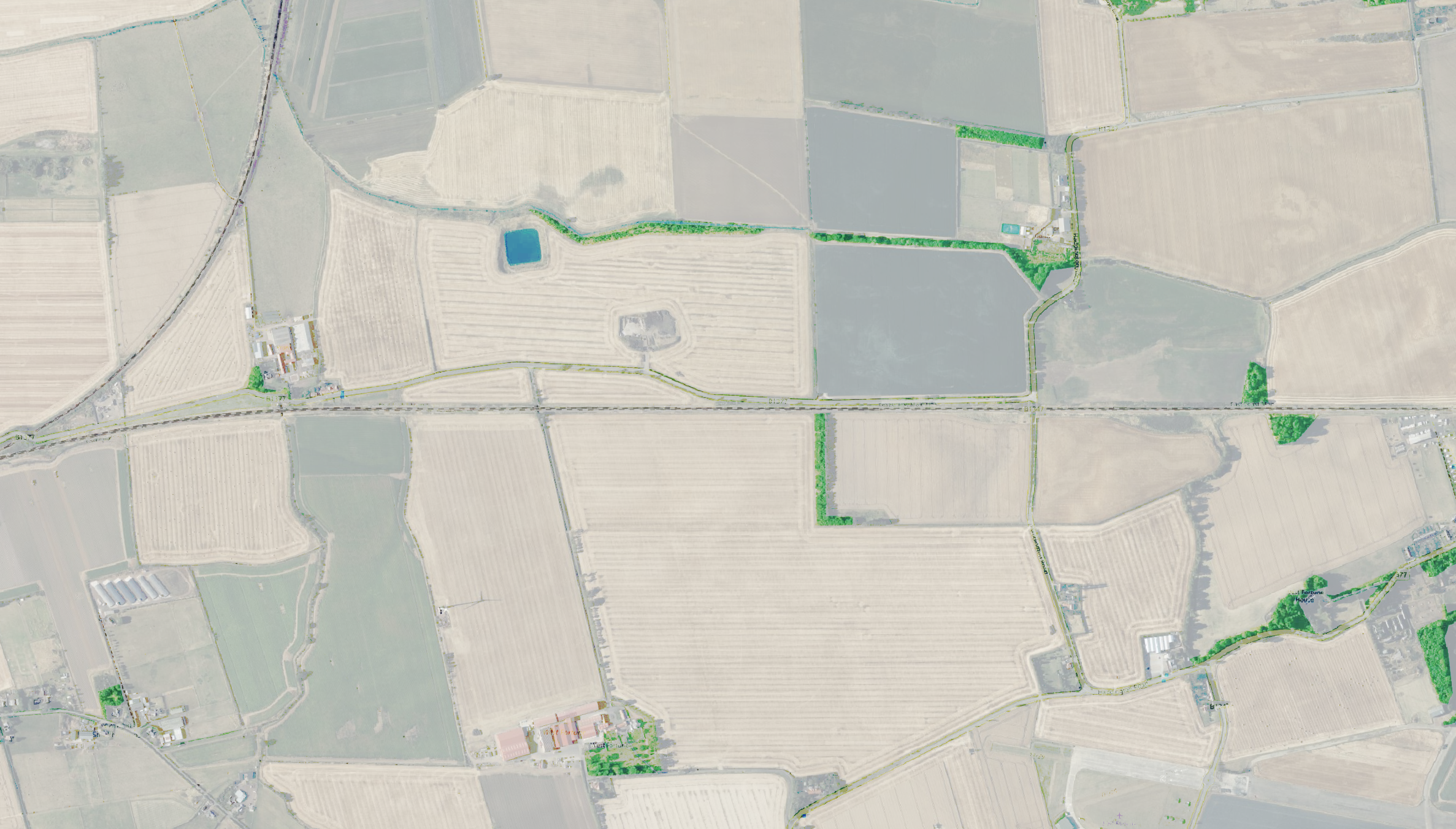
Haig Hamilton farms 1,050 ha at West Fortune, Drem, growing 240 ha of ware and crisping potatoes on deep sandy loam. His long-term average rainfall is 600mm. By the end of October 2025 he had received 350mm.
In spring 2024 he expanded an irrigation reservoir from 2 million to 7 million gallons, filling over winter from a nearby watercourse and a borehole. Total cost £116,000 — £86,000 of that the liner alone, £30,000 earthworks, with farm staff doing the work and plant hired in. Annualised over twenty years, £5,800 a year. The expanded reservoir irrigates 40 ha of potatoes at 125mm.
He funded it entirely himself, and the reason is worth knowing before anyone else plans similar work: RPID grant support for irrigation lagoons applies to new reservoirs, not extensions to existing ones.
The other detail we liked: alongside sixteen soil moisture probes and an automated weather station, he still insists on manual test digs to confirm what the sensors are telling him.
Two caveats
The scoring bands are a structured way of organising judgement, not a calibrated model, and the guide says plainly that the assessment is not a SEPA requirement. Treat a “high” score as a prompt to look harder, not as a verdict.
The guide also leans towards irrigated arable — potatoes, vegetables, soft fruit — because that is where the money and the abstraction pressure sit. For our catchments that is a feature rather than a limitation, but livestock-only holdings will find proportionally less in it.
Where to get it
The guidance, the project summary and the Drought Risk Profile Card are all free from CREW at crew.ac.uk. SEPA’s Drought Risk Assessment Tool and weekly water scarcity reports run through the season from May. Cranfield’s free D-Risk tool, covered in the appendix, will model irrigation shortfall probability and test reservoir sizing options if you want to go further.
If you would rather talk it through than read it, FAS offers specialist water advice plans to any holding with a registered BRN, covering water availability, diffuse pollution and flood management.
Planning for Water Scarcity: Practical guidance for Scottish farmers and growers (2026). Salter, Audsley, Prentice, Williams, Zuill, Buckingham, Cole, Haro Monteagudo, Adams and Booth. CRW2024_05, Centre of Expertise for Waters.